
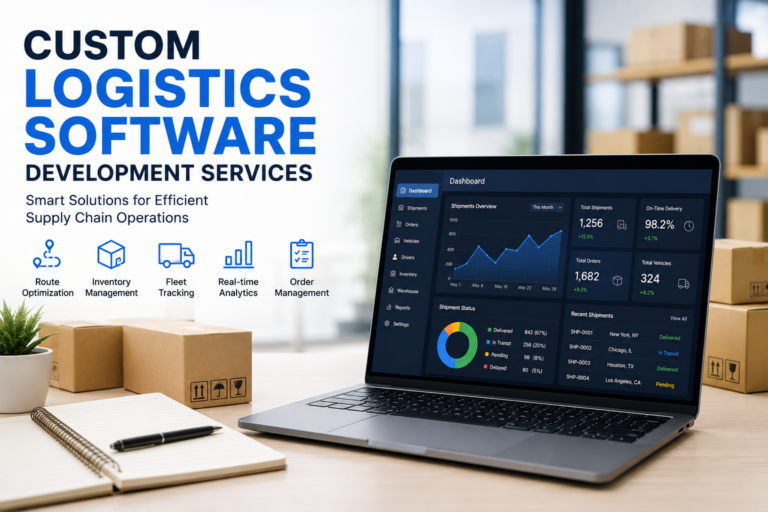
Custom logistics software development services include creating and developing software that meets the specific transportation, warehouse, inventory, and supply chain requirements of a company. Custom solutions are tailored to the unique workflows, operational objectives and future expansion plans, as opposed to off-the-shelf software.
Logistics software helps businesses across the USA to enhance the efficiency, cut down on the human labour and have better visibility in their operations. Custom logistics solutions help organisations streamline complex processes, whether it’s shipment management, warehouse inventory, or fleet performance.
Fast reply
Logistics software development services build specialised software solutions to streamline logistics processes, boost supply chain transparency, optimise transportation, and grow business through personalised digital services.
Key Points
Topic Summary
- Purpose Automates logistics and supply chain processes
- Primary Users Manufacturers, merchants, distributors, health care, eCommerce
- Key Benefits Efficiency, visibility, scalability, cost optimisation
- Common Features Fleet Tracking Inventory Management Warehouse Management Reporting
- Deployment Options Cloud, on-premise, hybrid
- Future Technologies AI, IoT, Predictive Analytics, Machine Learning
Why Businesses Choose Custom Logistics Software
various logistical operations have various needs. A typical software package may be over-featured and under-powered.
The proprietary logistics software allows organisations to develop workflows that are tailored to the day to day operations rather than tailoring business processes to generic software.
- Advantages of Custom Solutions
- Supports unique business processes
- Removes manual tasks
- Improves the operational accuracy
- Scalability of business
- Works with your existing business systems
- Improved reporting and analytics
Custom Logistics Software Development Services Key Features
Modern logistics software unifies a number of corporate operations inside a single central platform.
Transport Management
Transportation management allows companies to organise their delivery and shipping operations.
Features Include
- Routing Optimisation
- Carrier Administration
- Scheduling shipments.
- Assessment of goods cost
Warehouse management Delivery tracking
Automation and real-time inventory management boosts warehouse operations efficiency.
- Common Functions
- Scans bar code
- Updates on inventory
- Stock changes
- Selecting orders
Reporting on the Fleet Management warehouse
Companies using delivery vans employ fleet management solutions to keep tabs on their operations.
Fleet Management Features
GPS tracking
Driver’s monitoring
Vehicle Service Schedules
Reports on fuel use
Fleet Utilisation Inventory Control
Good inventory information prevents stockouts and surplus inventory.
Functions of Stock
Real-time inventory tracking
Stock Alerts Automation
Order Management
Inventory prediction
Log of product movement
Business Intelligence and Reporting
Custom dashboards translate operational data into actionable business insights.
Typical reports include:
- Delivery performance
- Warehouse Efficiency
- Transportation costs
- Turnover of inventory
- Customer satisfaction rates
Industries That Use Logistics Software
Custom logistics solutions are needed in many sectors.
Industry Key Benefits
Retail Quick order processing
Manufacturing Production and Inventory Coordination
Healthcare Stock control in the medical field
Wholesale Distribution Transport and warehouse management
Food and DrinkScheduling and delivery compliance
eCommerce Order processing & shipping tracking
Benefits of Custom Logistics Software Enhanced Operational Efficiency
Automation eliminates the repetitious effort, the paperwork. Employees spend more time on logistics than on manual data entry.
Better Visibility in Supply Chain
Managers have the ability to manage shipments, inventory, warehouses and transportation activity from one unified interface.
Real-time information help pinpoint delays before they become expensive issues.
Improved Accuracy
Automation technologies remove the possibility of human error in the inventory counts, shipment paperwork, invoicing and scheduling.
Increased scalability
Custom software can be developed further with the operational needs when organisations are going to new locations or markets without complete replacement.
Increased Customer Satisfaction
Customers like:
- Precise delivery estimates
- Shipment tracking in real time
- Speedy order processing
- Better communication
- Increased service dependability.
Logistics Software Main Technologies Used
Contemporary logistics platforms leverage new technologies for enhanced operational efficiency.
Artificial Intelligence (AI)
AI analyses operational data to detect potential delivery delays, predict demand and optimise routing.
Internet of Things (IoT)
Connected gadgets deliver live data from vehicles, warehouses and machinery.
Examples are:
Temperature Control
Tracking assets
Car Diagnostic
Smart sensors in warehouses
Cloud Computing
Cloud-based logistics platforms may be securely accessed from many business locations, which makes them easier to maintain and upgrade.
GPS Technologies
GPS helps companies to track vehicles, optimise route planning and offer clients real-time cargo monitoring.
Data analyses
By using advanced analytics, organisations may see trends and operational efficiencies to guide data-driven decisions.
Typical Challenges that Custom Logistics Software Solves
- Many organisations are inefficient in their logistics.
- Challenge Software Solution
- Workflow automation Paperwork work
- Route planning Delivery delays
- Inventory inaccuracyReal time stock management
- Lack of operational visibility.Centralized dashboards
- More expensive transportFleet optimization
- Data silos System integration
- Best Practices for Creating Logistics Software
When designing custom logistics software, organisations need to prepare properly.
Understand the business requirements
Identify operational challenges clearly prior to development.
Questions to ponder
- What processes should be automated?
- What systems do we need to integrate?
- Which departments will be using the software?
- What are the prospects for growth in the future?
User Experience Centric
Easy-to-use interfaces make employees more productive and reduce the amount of training they need.
Security foremost
Logistics systems might hold critical operational and consumer information.
Security measures should consist of:
- Encryption of data
- User Identification
- Permissions depending on roles
- Frequent backups
- Develop for Growth
Business requirements change over time. Scalable software is capable of handling growing amounts of transactions, users and operational complexity.
Top Trends of Customised Logistics Software Development
Technology is still changing the logistics game.
The main tendencies are:
- AI Automatisierung
- Predictive analysis
- Digital supply chains
- Robotics in warehouses
- Delivery self-driving tech
- Blockchain for Shipment Tracking
- Cloud native logistics platform
- Transportation Management for Sustainability
Businesses that use these technologies can increase efficiency and remain competitive.
FAQ’s (Frequently Asked Questions)
What is Custom Logistics Software Development Services?
Custom logistics software development services are services that build custom software solutions that automate transportation, inventory, warehouse management, shipment tracking, and supply chain activities depending on the specific needs of a firm.
Who needs specialised logistics software?
Custom logistics solutions are useful for manufacturers, merchants, distributors, healthcare providers, transportation organisations and eCommerce businesses.
What are the differences between custom logistics software and off-the-shelf solutions?
Custom logistics software is tailored to the unique workflows, operational goals, and scalability demands of a single company. Off-the-shelf software provides typical capabilities for many firms.
Can logistics software be integrated with existing systems?
Yes. Most custom logistics solutions interact with ERP systems, CRM software, accounting software, warehousing systems, payment platforms and third party APIs.
Why is cloud-based logistics software gaining popularity?
Cloud adoption enhances access, lowers infrastructure costs, allows remote access, makes upgrades easier, and provides corporate scalability.
Summary
Custom logistics software development services provide firms with personalised technological solutions to boost efficiency, visibility, and operational correctness. Custom logistics platforms streamline complex supply chain processes, handling everything from transportation management and warehouse automation to inventory tracking and comprehensive reporting.
Across the USA, companies continue to roll out custom logistics software because of the more flexibility, scalable support for corporate growth, and ability to respond to shifting operational needs. As artificial intelligence, IoT, cloud computing and predictive analytics technologies keep improving, custom logistics software will remain an integral part of contemporary supply chain management.