
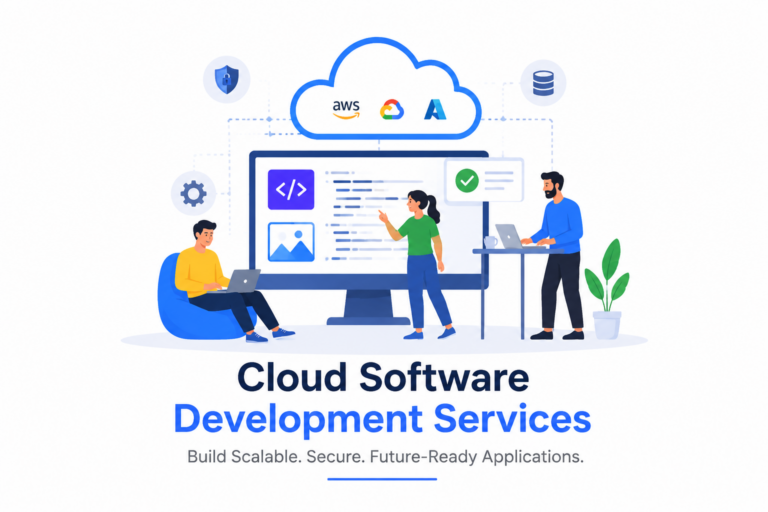
Cloud software development services allow enterprises to develop, run and manage software applications using cloud computing technology. Across the USA, companies are using cloud-based solutions to increase flexibility, cut infrastructure costs and accelerate digital transformation.
By using remote servers, scalable computing resources and online platforms, cloud software development allows applications to be delivered faster and more efficiently than traditional software development. “Companies of all sizes, from start-ups to large enterprises, are leveraging cloud solutions to improve their operations, manage data and deliver better digital experiences.
As industries such as healthcare, banking, retail, education, and manufacturing adopt cloud computing at an increasing rate, the demand for professional cloud software development services has skyrocketed. These services help businesses construct secure, reliable and scalable applications that match the demands of current technology.
What are Cloud Software Development Services?
Cloud software development services comprise the process of planning, building, testing, deploying, and maintenance of applications that run on cloud infrastructure. Cloud applications run over the internet, not on local servers or personal devices.
Cloud developers design applications leveraging cloud platforms, programming frameworks, databases, and security technologies that scale up and down as needed for the business.
Common services of cloud software development are:
- Development of cloud applications
- Cloud Migration Solutions
- Software re-engineering
- Cloud-native development for applications
- API development & integration
- Cloud-based DBMS
- Seguridad en la nube
- Continuous delivery and DevOps solutions
- Maintaining cloud applications
These services let companies build adaptable software systems without the need to spend considerably on physical hardware.
Why Companies in the USA Use Cloud Software Development
US businesses are moving to cloud solutions because they offer operational benefits and support long-term growth. Cloud technology enables organizations to adapt swiftly to changes in the market and the needs of customers.
Better scalability
As traditional software systems evolve, firms often need to purchase more hardware. This limitation of on-premise software is removed with cloud software, allowing firms to add or subtract resources based on demand.
For example, an e-commerce company might ramp up its cloud capacity during holiday sales and ramp down as demand subsides.
Lower Infrastructure Costs
Cloud software development eliminates the need for costly servers, maintenance, and physical infrastructure. Businesses can get cloud resources on flexible, usage-based pricing structures.
This allows firms to better control their IT spend and access sophisticated computer power.
Improved Accessibility
Cloud apps provide the ability to access software from numerous locations and devices. For this reason, remote working environments are supported and they are prevalent in many businesses in the USA.
Employees may collaborate, manage projects & access critical business information from anywhere there’s an Internet connection.
Increased Security
Security practices in professional cloud software development services are:
- Encryption of data
- Identity management
- Access control
- Security Surveillance
- Updates regularly
Industry security standards are used by cloud providers and development teams to protect sensitive company information.
Types of Cloud Software Development Solutions
There are several forms of cloud software development depending on business objectives and technology ambitions.
Cloud Native Applications
Cloud-native applications are specifically built for the cloud. Developers construct these apps using modern techniques such as microservices, containers, and automated deployment systems.
Benefits include:
- Reduced development cycles
- More scalable .
- Better performance for applications
- Easier to refresh
- SaaS Development
SaaS apps distribute software over the Internet, without the need for users to install programs locally.
The following are examples:
- Customer relationship management systems
- Project management software
- Contabilidad software
- Communication channels
SaaS development allows enterprises to offer software solutions to clients on a subscription basis.
Cloud Migration Services
Migrating current apps, databases and systems to the cloud from traditional infrastructure.
A typical cloud migration procedure consists of:
- Evaluation of existing systems
- Choosing the proper cloud environment
- Data Migration Planning
- Application testing
- Implementing the new system
Migration helps companies to increase performance and minimize reliance on legacy systems.
Popular Cloud Development Technologies
Cloud software development combines a range of technologies to produce robust apps.
Cloud Platforms
The most popular cloud platforms provide services such as application hosting, storage, networking and computation. Depending on the technical needs, security requirements and budget, companies choose platforms.
Microservices and Containers
Containers enable developers to package apps with everything they need. Microservices break apps into smaller, independent services.
These technologies allow more flexibility and make it easier to update apps.
Cloud Integration & APIs
APIs allow software systems to talk to each other. API integration is a common aspect of cloud application development, allowing the connection of business tools, databases, and third-party services.
Cloud Software Development Process
A disciplined development methodology helps build secure and productive cloud apps.
1. Requirements Analysis
First, developers grasp corporate objectives, user demands, technological requirements, and expected results.
At this point, the application features and project scope are defined.
2. Designing Cloud Architecture
Cloud architecture is defined by the development team and includes:
- Structure of the application
- Database design
- Security needs
- Deployment strategy
Reliability and future scalability improve with a good architecture.
3. Developing the Application
Developers write code and build application enhancements, and integrate cloud services, as needed.
They adopt the finest practices in software development to assure quality and performance.
4. Security Review and Testing
Technical problems are found before launch through testing. Teams shall:
Security testing Load testing Compatibility testing
User acceptance tests
5. Implementation and Maintenance
When the tests pass, the developers deploy the application to the cloud environment.
Maintenance is a continuous process that involves updates, monitoring, security enhancements, and performance optimization.
Industries Using Cloud Software Development Services in USA
Many sectors across the United States use cloud technology.
Health care
Cloud applications are utilized by healthcare companies for:
- Patient Records Management
- Telemedicine Locations
- Medical records systems
- Health Care Analytics
Cloud solutions offer increased accessibility while yet adhering to data protection rules.
Financial Services
Banks and financial institutions use cloud software for:
- Digital banking channels
- Systems for the detection of fraud
- Financial analytics
- Managing customers
Security and compliance still lead the way in financial cloud development.
Retail & E-Commerce
Retail businesses employ cloud solutions to manage :
- Online shops
- Inventory management systems
- Customer experiences Sales analysis
Cloud scalability enables retailers to respond to changing client demand.
Education
Educational institutions utilize cloud platforms for:
- Systems of Online Learning
- Student management system
- Tools for collaboration Virtual classrooms
Cloud technology allows more adaptable educational environments.
Key Factors to Consider When Selecting Cloud Software Development Services
There are a number of things that businesses should consider before launching a cloud development project.
Important concerns are:
Technical expertise
Understanding cloud security
Industry background
Development approach
Practices regarding data privacy
Options for Long-Term Support
A good project plan results in better results for companies and prevents additional costs.
What’s Next in Cloud Software Development Trends?
Cloud software development is always evolving as new technologies emerge.
Future trends are:
The use of AI in
Building serverless applications
Edge computing
Automated DevOps pipelines
Next-Generation Cloud Security Solutions
As digital transformation becomes more crucial, cloud use will likely expand in the USA.
Cloud Software Development Services Frequently Asked Questions
Frequently Asked inquiries (FAQs) Common inquiries about cloud software development services. It discusses fundamentals, benefits, prices, and key concerns for firms considering cloud-based solutions.
What Are Cloud Software Development Services?
Cloud software development services are services that help you build, deploy and maintain software applications that run on cloud infrastructure instead of local, traditional servers.
Why Do Companies Need Cloud Software Development?
Businesses leverage cloud software development to enhance scalability, minimize infrastructure costs, promote accessibility and support digital transformation.
How long does it take to construct a cloud app?
The development timeframe depends on the complexity of the program, features needed, integrations and testing needs. Simple applications may take weeks, whereas major business systems can take many months.
Are cloud software safe?
Can cloud software be secure? Yes, if developers include suitable security features such as encryption, access controls, monitoring, and regular upgrades.
What industries are cloud software development good for?
Software-as-a-service solutions are widely used in healthcare, finance, retail, education, manufacturing and professional services to increase efficiency and client experiences.